

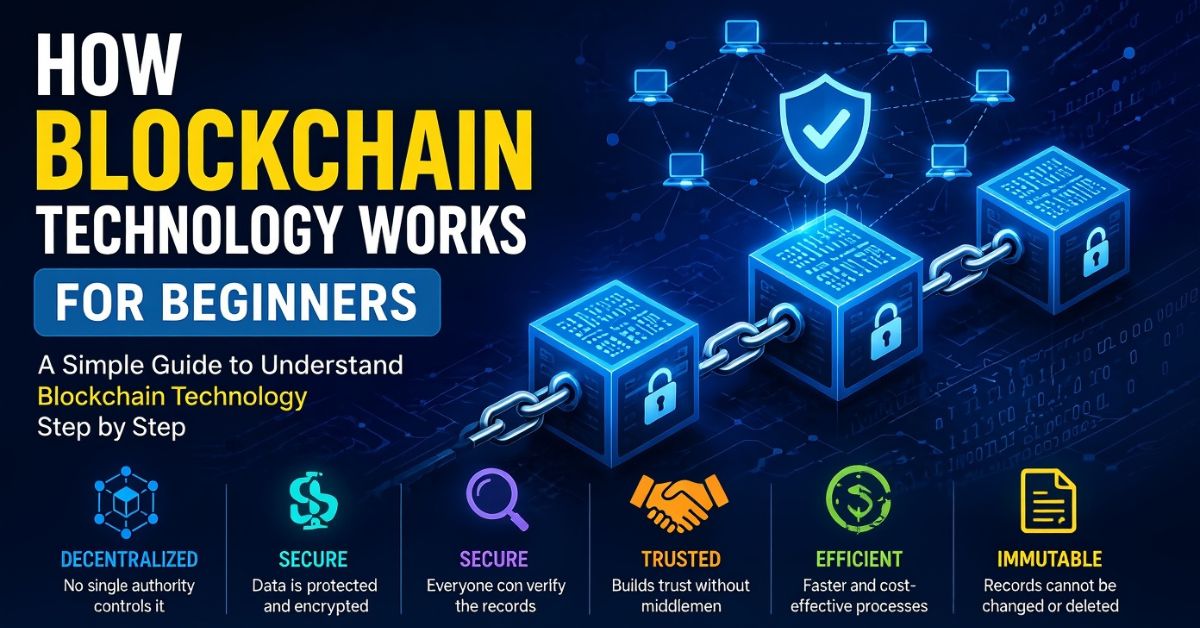
Many people hear about blockchain when they talk about cryptocurrency. However, blockchain technology is much bigger than digital coins. Today, companies, banks, healthcare services, and online businesses use blockchain technology for secure and transparent systems. That is why many beginners want to understand how blockchain technology works for beginners in a simple way.
Blockchain is a digital system that stores information safely. It records data in blocks and connects them in a chain. This process creates a secure and transparent network. No single person controls the data completely. Instead, many computers share and verify the information together.
The main reason blockchain technology became popular is security. It protects records from hacking and changes. Once information enters the blockchain, changing it becomes very difficult. This feature makes blockchain trusted for payments, online contracts, healthcare records, and supply chains.
Many experts believe blockchain technology will shape the future of digital systems. Students, bloggers, business owners, and developers now study blockchain because companies continue to adopt it worldwide. Understanding how blockchain technology works for beginners can help people prepare for future technology trends and digital careers.
What Is Blockchain Technology?
Blockchain technology is a digital ledger system. It stores information in blocks. Each block contains data, timestamps, and a unique code called a hash. These blocks connect together in order and create a secure chain.
The word blockchain comes from two words: block and chain. Every new block links with the previous block. This connection keeps the information safe and organized. If someone tries to change one block, the whole chain becomes affected. The network quickly detects the change.
A blockchain network works through multiple computers called nodes. These computers verify transactions and keep copies of the blockchain. Because many systems share the same information, blockchain becomes decentralized. No single company or authority controls everything.
Here is a simple table explaining the main parts of blockchain technology.
| Blockchain Part | Simple Explanation |
|---|---|
| Block | Stores information or transaction data |
| Chain | Connects blocks together |
| Hash | Unique security code for each block |
| Node | Computer that verifies blockchain data |
| Ledger | Record of all transactions |
| Decentralization | Shared control across many systems |
Understanding these basic terms makes it easier to learn how blockchain technology works for beginners. The system may sound technical at first, but the concept is simple. Blockchain stores data securely through connected digital records.
How Blockchain Technology Works for Beginners Step by Step
To understand how blockchain technology works for beginners, it is important to learn the process step by step. Blockchain follows a simple flow that helps secure data and transactions.
When someone sends information through a blockchain network, the system creates a transaction request. This request can include cryptocurrency payments, contracts, records, or digital files. The network then sends the request to many computers connected to the blockchain.
These computers verify the transaction using special rules and algorithms. After verification, the transaction enters a new block. The system adds a unique hash code to the block for security purposes.
Next, the new block connects with the previous block in the chain. Once connected, the information becomes permanent and difficult to change. Every computer in the network updates its blockchain copy with the new information.
This process creates trust between users without needing a middleman like a bank. That is one reason blockchain technology has become so valuable in modern digital systems.
f(x)=x2
Although blockchain mainly handles digital records, experts often use secure mathematical formulas and encryption methods behind the scenes to protect data. These systems help blockchain remain safe and reliable.
People often compare blockchain to a digital notebook shared by thousands of computers. Everyone can see the records, but nobody can secretly change them. This transparency makes blockchain technology useful for businesses and online services.
Important Features of Blockchain Technology
Blockchain technology offers several powerful features that make it different from traditional systems. These features explain why companies trust blockchain for secure digital operations.
One important feature is decentralization. Traditional databases usually depend on one central server. Blockchain spreads data across many computers instead. This setup reduces risks because there is no single point of failure.
Another important feature is transparency. Every transaction becomes visible to users in the network. This openness improves trust between companies and customers. Many businesses use blockchain to track products and confirm records honestly.
Security is also a major advantage. Blockchain uses encryption and hashing methods to protect information. Once data enters the blockchain, changing it becomes very difficult. Hackers cannot easily modify records because the whole network checks every change.
Blockchain also improves speed in many digital transactions. Traditional banking systems may take days to process international payments. Blockchain networks can complete transactions much faster.
Here is a table showing the key features of blockchain technology.
| Feature | Benefit |
|---|---|
| Decentralization | No single authority controls data |
| Transparency | Users can verify records easily |
| Security | Strong protection against hacking |
| Speed | Faster online transactions |
| Immutability | Records cannot change easily |
| Trust | Reduces need for middlemen |
These features explain why blockchain technology continues growing across many industries. Learning these benefits helps beginners understand the real value of blockchain systems.

Uses of Blockchain Technology in Daily Life
Many people think blockchain only supports cryptocurrency. However, blockchain technology now helps many industries and services in daily life. Understanding these applications helps explain how blockchain technology works for beginners in real-world situations.
Banks use blockchain for faster payments and secure international money transfers. Traditional transfers can take several days, but blockchain systems often complete transactions much faster.
Healthcare companies use blockchain to protect medical records. Patients and hospitals can securely share important information without risking data leaks. This process improves privacy and reduces fraud.
Online shopping businesses use blockchain for supply chain tracking. Customers can see where products come from and verify authenticity. This feature helps stop fake products in the market.
Educational institutions also explore blockchain systems. Schools and universities can store certificates and degrees safely. Employers can verify documents quickly without paperwork problems.
Gaming companies now use blockchain for digital assets and virtual items. Players can own unique digital products securely through blockchain systems.
Here are some popular blockchain uses.
| Industry | Blockchain Use |
|---|---|
| Banking | Fast secure payments |
| Healthcare | Safe medical records |
| Education | Digital certificates |
| Shopping | Product tracking |
| Gaming | Secure digital assets |
| Real Estate | Smart contracts |
These real-world examples show why blockchain technology matters in modern life. Businesses continue finding new ways to use blockchain for security and transparency.
Benefits of Learning Blockchain Technology
Learning blockchain technology offers many advantages for students, bloggers, developers, and business owners. As digital systems continue growing, blockchain skills become more valuable every year.
Students can explore new career opportunities through blockchain education. Many technology companies now hire blockchain developers, analysts, and cybersecurity experts. Learning blockchain early can help students build future-ready skills.
Bloggers and content creators also benefit from blockchain knowledge. Technology blogs covering blockchain trends attract large audiences because readers want easy explanations about digital systems and cryptocurrency.
Business owners can improve online security and transparency with blockchain solutions. Companies use blockchain to reduce fraud, improve payment systems, and build customer trust.
Another major benefit is innovation. Blockchain technology supports smart contracts, decentralized finance, and secure digital identities. These systems may shape the future of online business and digital communication.
Here is a table showing blockchain learning benefits.
| User Type | Benefit |
|---|---|
| Students | Better career opportunities |
| Bloggers | Popular technology content |
| Businesses | Improved security |
| Developers | High-demand technical skills |
| Online Stores | Safer transactions |
| Organizations | Better transparency |
Because blockchain technology continues growing worldwide, learning its basics can help people stay prepared for future technology changes.

Difference Between Blockchain and Traditional Databases
Many beginners compare blockchain with traditional databases. Both systems store information, but they work differently. Understanding these differences helps explain how blockchain technology works for beginners more clearly.
Traditional databases usually operate under one company or authority. A central administrator controls updates, permissions, and security settings. This setup works well for many businesses but also creates risks if hackers attack the central system.
Blockchain uses decentralization instead. Multiple computers share and verify the same information. This structure increases security and transparency.
Another difference is data editing. Traditional databases allow easy updates and deletions. Blockchain records become permanent after verification. This feature improves trust and prevents unauthorized changes.
Blockchain also uses cryptographic hashing for security. Traditional databases may rely mainly on passwords and server protection.
The following table compares blockchain and traditional databases.
| Feature | Blockchain | Traditional Database |
|---|---|---|
| Control | Shared network | Central authority |
| Security | High encryption | Standard protection |
| Transparency | Open records | Limited visibility |
| Editing | Difficult to change | Easy to modify |
| Trust System | Decentralized | Centralized |
| Speed | Moderate | Fast for simple tasks |
Both systems have advantages. However, blockchain works better for secure and transparent digital environments.

Challenges and Limitations of Blockchain Technology
Although blockchain technology offers many benefits, it also faces several challenges. Beginners should understand these limitations while learning how blockchain technology works for beginners.
One major challenge is energy usage. Some blockchain systems require large amounts of electricity for transaction verification. This issue raises environmental concerns in some countries.
Blockchain networks can also become slower during heavy usage. Large transaction volumes may increase waiting times and processing costs.
Another challenge is technical complexity. Many people still find blockchain difficult to understand. Businesses often need skilled developers and experts to manage blockchain systems properly.
Government regulations also affect blockchain growth. Different countries follow different rules for cryptocurrency and blockchain services. These changing regulations can create uncertainty for businesses.
Security risks still exist as well. While blockchain itself is secure, hackers sometimes target wallets, exchanges, and user accounts.
Despite these challenges, experts continue improving blockchain systems. New technologies aim to reduce energy usage and improve transaction speed.
Understanding both advantages and limitations gives beginners a balanced view of blockchain technology and its future possibilities.
Future of Blockchain Technology in 2026 and Beyond
The future of blockchain technology looks very promising. Many experts believe blockchain will become part of everyday digital life in the coming years.
Banks continue investing in blockchain payment systems. Governments also explore digital currencies based on blockchain networks. These changes may improve financial systems worldwide.
Artificial intelligence and blockchain may also work together in future applications. AI can help analyze blockchain data, while blockchain can improve AI security and transparency.
Smart contracts are another growing area. These digital contracts automatically complete agreements without middlemen. Businesses can save time and reduce paperwork using smart contract systems.
The Internet of Things, often called IoT, may also use blockchain technology. Smart devices can share information securely through blockchain networks.
Healthcare, education, online shopping, and entertainment industries continue exploring blockchain solutions. This growth creates many opportunities for developers and technology professionals.
Because blockchain technology continues evolving rapidly, beginners who learn it today may gain valuable digital skills for future careers and businesses.
Conclusion
Understanding how blockchain technology works for beginners is easier when explained in simple language. Blockchain is a secure digital system that stores information in connected blocks. It uses decentralization, encryption, and transparency to protect data and transactions.
Today, blockchain technology supports banking, healthcare, education, shopping, gaming, and many online services. Companies trust blockchain because it improves security and reduces fraud risks. Although blockchain still faces challenges like energy use and technical complexity, experts continue improving the technology.
Students, bloggers, developers, and business owners can all benefit from learning blockchain basics. As digital systems grow in the future, blockchain knowledge may become even more important.
The future of blockchain technology looks strong in 2026 and beyond. Understanding its basics today can help people prepare for tomorrow’s digital world.
FAQs About How Blockchain Technology Works for Beginners
What is blockchain technology in simple words?
Blockchain technology is a digital system that stores information securely in connected blocks. Many computers share and verify the data together.
Why is blockchain technology important?
Blockchain technology improves security, transparency, and trust in digital systems. It helps reduce fraud and protects online transactions.
Is blockchain only used for cryptocurrency?
No, blockchain technology also supports healthcare, education, online shopping, gaming, banking, and many other industries.
Can beginners learn blockchain technology easily?
Yes, beginners can learn blockchain technology step by step using simple explanations and real-life examples.
What is the future of blockchain technology?
Experts believe blockchain technology will continue growing in banking, artificial intelligence, smart contracts, healthcare, and digital security systems.